
We promise that we won’t mimic a family member who takes a memorable trip and then insists on spending 2+ hours at Thanksgiving narrating a slide show while the turkey gets seriously over-cooked (of course, that’s just a hypothetical scenario).
 But … on our recent trip to Greece, following in the footsteps of Paul with a group of TMC colleagues, we were struck by the power of street art in Athens. Two thousand years ago, Paul went to the Athenian marketplace to gauge and engage the experience of the citizens. Were he to appear in Athens today, he might walk the streets of the Psyrii neighborhood instead, to find out what people are really feeling—and how they are expressing it.
Psyrii is at the center of Athens’ street art scene. Once a neglected industrial area, it has transformed into a lively canvas for social commentary during Greece’s extended economic crisis of the past 15 years. Local and international artists alike have used its public-facing walls to process collective trauma, displacement, and hope. Often under cover of night, they have climbed onto scaffolds and composed complex works on economic inequality, social media, the refugee crisis, and Greece’s painfully high youth unemployment (reaching as high as 30%).
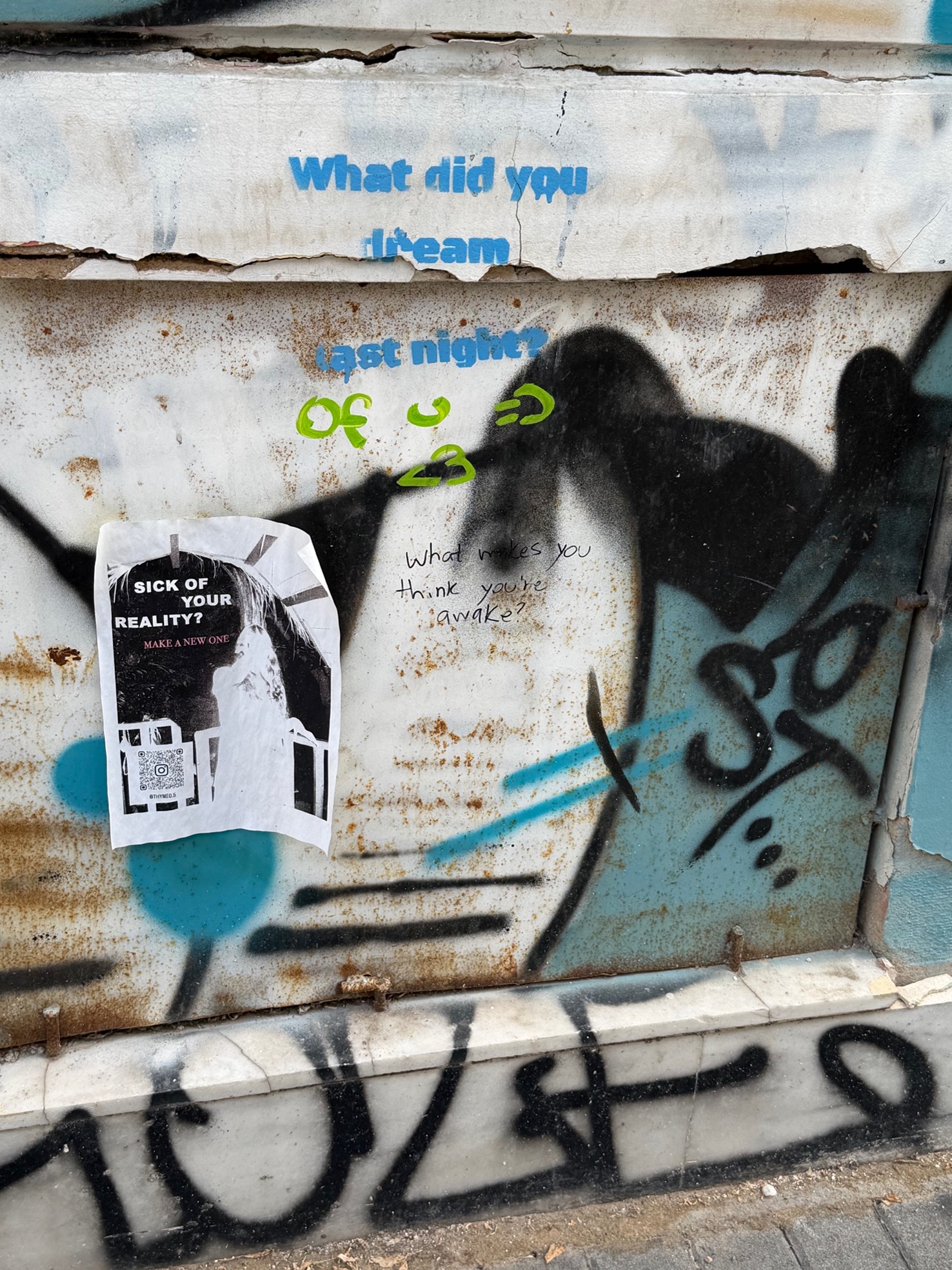
There is less composed art as well, closer to the ground, like the patch of wall pictured above that poses alternate questions and possibilities:
What did you dream last night?
What makes you think you are awake?
Sick of your reality? Make a new one
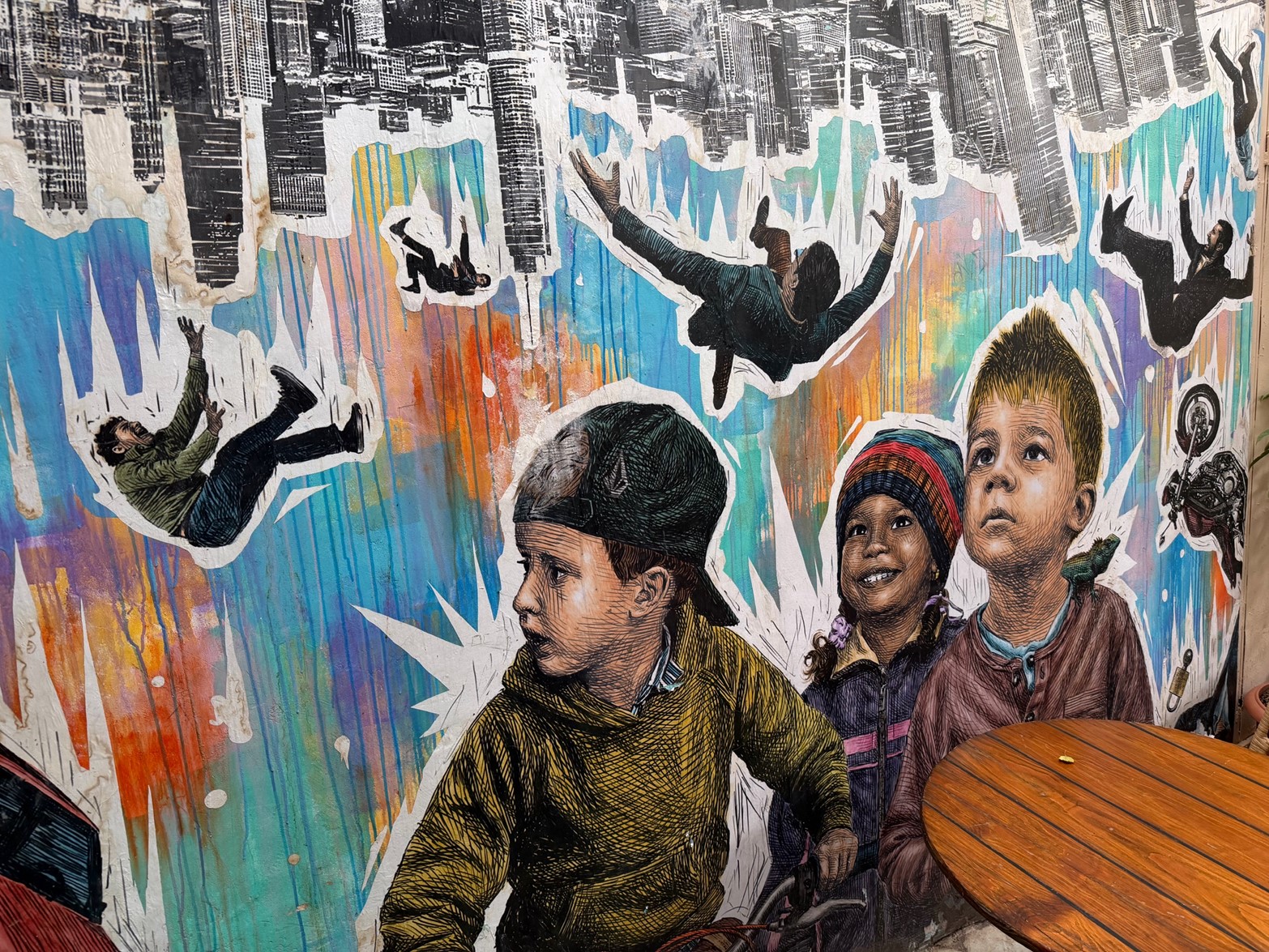 Down the same street, in the courtyard of a neighborhood cafe, a mural goes to the heart of the recent economic crisis. As children look on, grown-ups fall out of a city turned upside down. Gravity itself is up for grabs, and reality is fractured—the colors of childhood wonder meet the instability of the grey modern world. And yet the faces of the three children evidence differing emotions about what is happening in their young lives.
And then there is this image, overlooking Psyrii’s main square.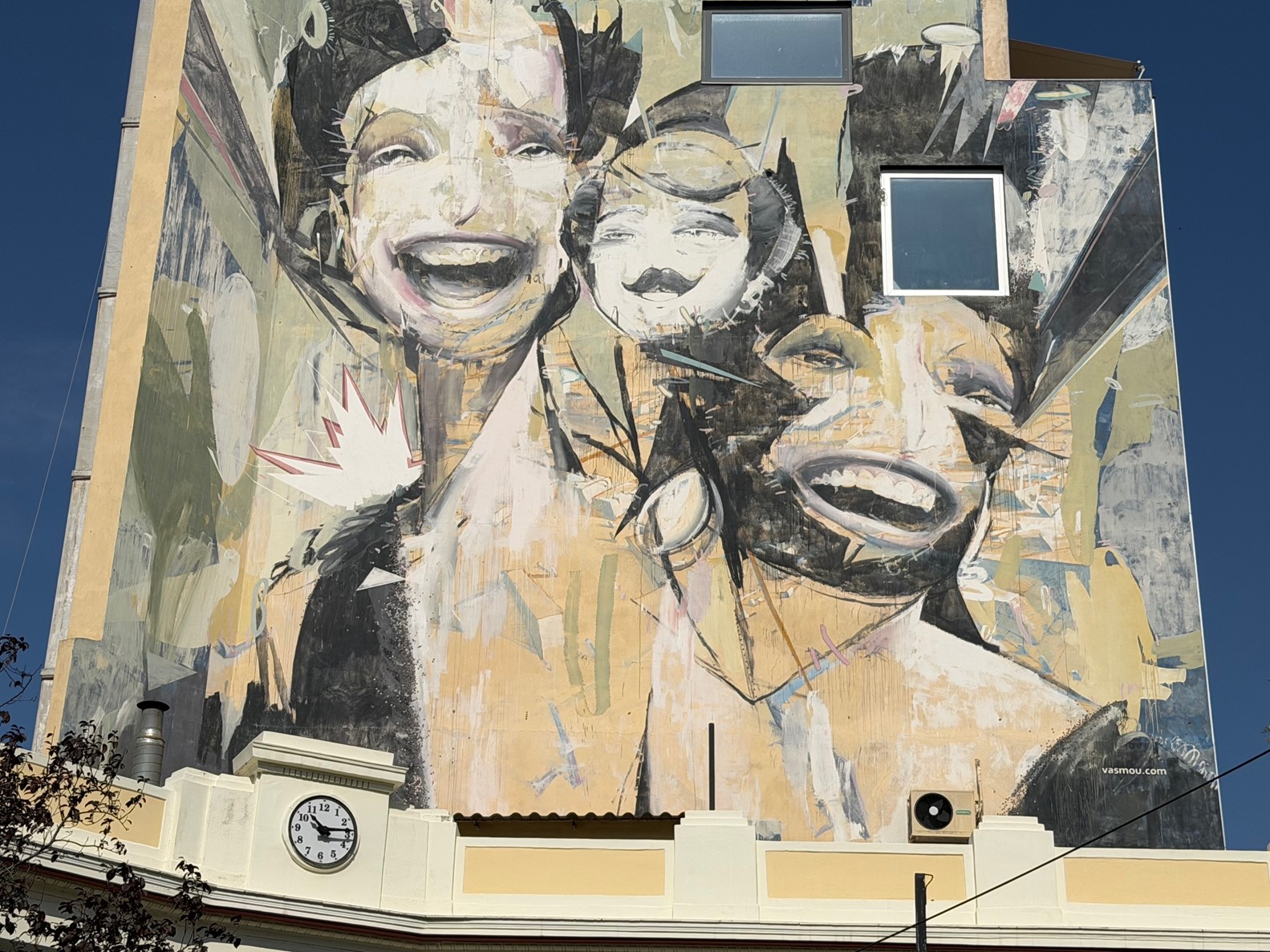 Again, three faces – and again, they demand closer attention. Their mouths are smiling. Their eyes are not. The Greek street artist Vasmou offered this mural as an “emotional snapshot” of his people struggling to cope, in the midst of the crisis, by feigning joy on social media while feeling abandoned inside.
Remember those three children watching their city fall, their faces revealing different responses to the upheaval? Every congregation contains the same diversity of spiritual experience in our tumultuous time: some alive with wonder amidst the chaos, others pained and struggling, still others turning away after gravity itself has proven unreliable. Congregational leaders have the profound opportunity to create and nurture space for all these responses. We know that authentic faith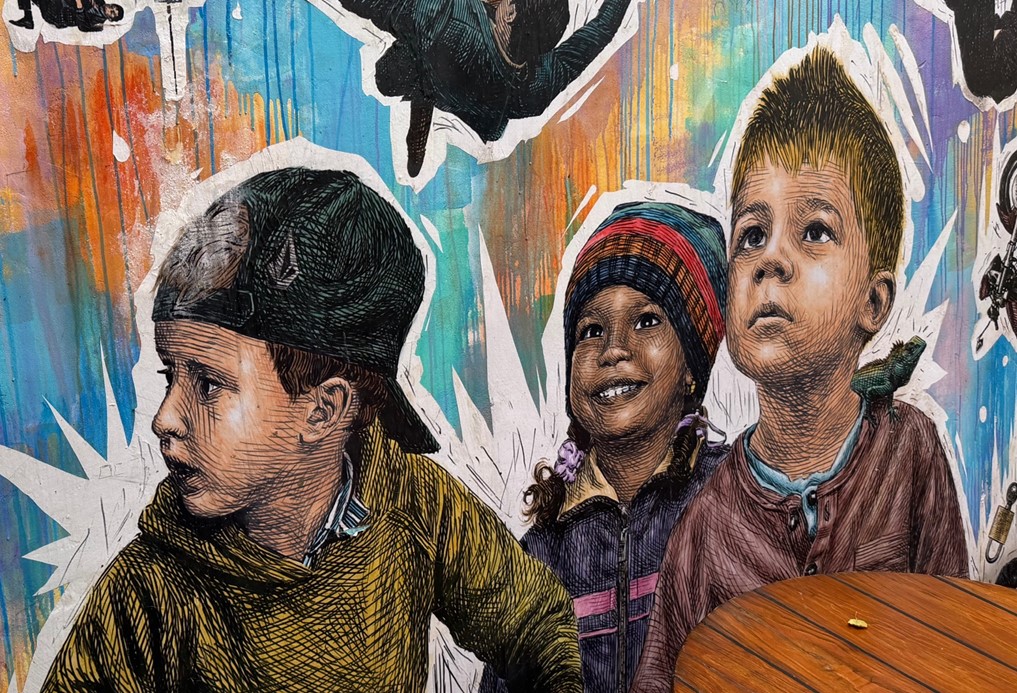 sometimes looks like confusion, sometimes like lament, sometimes like the slow, unglamorous work of rebuilding trust. And yet, in the press of budgets, staffing, and programming, this work gets forgotten. Every faith community needs to find new ways to engage it.
The question for church boards is direct: Will we cultivate Instagram-worthy sanctuaries where members maintain smiling faces and hollow eyes, or will we become messy public places where reality—economic anxiety, relational fracture, spiritual doubt—can be named and processed together?
The street art of Psyrii isn’t placed in galleries requiring admission tickets; spiritual depth can’t be confined to pastors’ offices or crisis counseling. It must become part of the congregation’s public vocabulary.
Church boards don’t have to invent this public vocabulary from scratch. We’re drawing on deep traditions that our performance culture has buried. Our theological heritage is rich with resources for authentic struggle: the brutal honesty of the lament psalms, Job’s unflinching complaints, Jesus’ Gethsemane agony, Paul’s unresolved “thorn in the flesh.” These are resources that every church board can draw upon for language that frames contemporary pain—job loss, fractured families, mental health crises—instead of demanding curated faithfulness.
The implications for congregations run deeper than programming changes. It’s about creating cultures where those street corner questions become legitimate spiritual inquiries: “What did you dream last night?” (What longings has God planted in you?), “Sick of your reality? Make a new one” (Jesus’ call to real transformation, not positive thinking), “What makes you think you are awake?” (Are we spiritually aware or just going through motions?).
We write these pieces each week because we are convinced that when congregations go deeper, they will stop asking people to perform joy while feeling abandoned inside. What an actual joy, when congregations become places where all the children in this upside-down world—the wondering, the struggling, the detached—find themselves held in God’s love.
Which of the street art images shared here interests you most? Can you say why?
What scripture would you pair with the mural of the children in an upside-down world, to anchor a church board conversation? What questions would you ask of the pieces—and of each other?
If Paul were to visit your community today, where would you encourage him to go in order to understand what people are experiencing at the deepest level?
How could your congregation go there, too?
No Comments