
Pay attention.
Be astonished.
Tell about it.
Mary Oliver wrote these lines, sometimes titled “Instructions for Living,” when she was approaching her eighth decade of life. Last month, Jonathan Haidt invoked them to frame his NYU commencement address on the importance of “treasuring” one’s attention. We think that Oliver’s three lines, Haidt’s address, and the theme of attention offer a good place to start as we consider intentions in the weeks to come.
The competition for attention is at a fever pitch these days, though that competition often presents itself in a subtle, seemingly benign guise. A click on some vague headline will lead you to another click, and then another, just never to the thing that piqued your curiosity. One TV show rolls into the next in six seconds (who has time for the credits), and suddenly the afternoon is gone. Group texts, funny reels – or, perhaps more relevant for this audience – droning meetings that last way longer than they need to … before we know it, our time and our attention have been diverted from us, seemingly stolen away.
In his NYU address, Haidt took time to reference David Foster Wallace’s own highly memorable commencement address at Kenyon college in 2005, in which Wallace said:
…the really significant education-in-thinking that we’re supposed to get in a place like this isn’t really about the capacity to think, but rather about the choice of what to think about.
Building on Wallace, Haidt observed:
…two decades later, there would be so many powerful people and big companies trying to take that choice away from you. They compete with each other to capture your attention. Think about that phrase. It acknowledges that your attention is valuable. But it also reveals that some of the biggest corporations in human history aren’t trying to earn your attention or deserve your attention. They’re trying to take it from you.
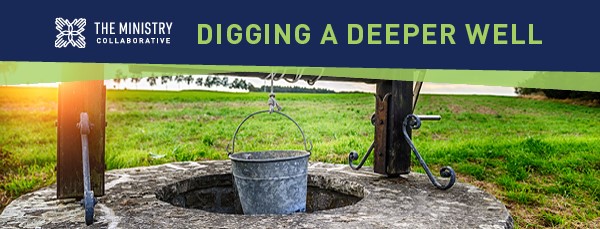
When Jesus directs his followers to look at the lilies of the field, or when he is passing through town and feels someone touch his cloak, or when he finds himself at the well in the public square at high noon and encounters a woman with questions about life and faith, or when he is walking through a field and gives no mind to his disciples plucking heads of grain to eat on the sabbath – at all times, Jesus is paying attention to things that really matter.
As a church board, you have the God-given opportunity, along with your pastors and ministry directors, to choose the places of your attention, and to filter out those things which present as urgent but in fact are sucking the life out of the world.
Jonanthan Haidt posed two questions toward the end of his remarks:
…along with the question “What should I turn my attention towards?” comes a related question: “Whom should I spend my attention on?” The answer is going to be different for each of you. And once again, the answer may also be the same for all of you: You should spend a lot of your attention on real people in the real world.
At your next board meeting, take notice. Who are you spending your attention on? Not vague categories of people, but really, Who? What are their names and their circumstances? What are their questions, their hopes, their fears? You don’t need to write or rewrite a mission statement if you can answer those questions.
Indeed, we should all spend a lot of our attention on real people in the real world that God has made and redeemed.
Which of the three lines in Mary Oliver’s “Instructions for Living” is most important, and why?
Where have you squandered your attention in the past week? Where have you spent it well?
Who or what taught you to spend your attention wisely? Who or what helps you spend it wisely today?
How would Jesus answer Haidt’s two questions: “What should I turn my attention towards?” and “Whom should I spend my attention on?”
How would your church board answer Haidt’s two questions: “What should we turn our attention towards?” and “Whom should we spend our attention on?”
Does your church board agenda reflect those answers?



No Comments