


When all the ways forward feel like lose-lose scenarios, choose depth instead.
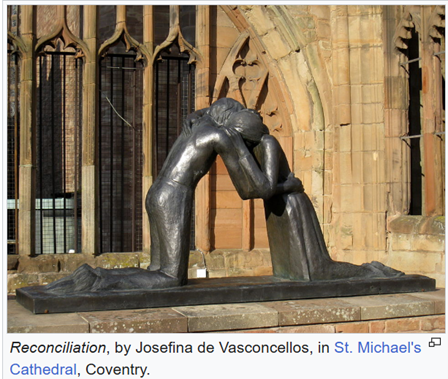 “The deeper our faith, the more doubt we must endure; the deeper our hope, the more prone we are to despair; the deeper our love, the more pain its loss will bring: these are a few of the paradoxes we must hold as human beings. If we refuse to hold them in the hopes of living without doubt, despair, and pain, we also find ourselves living without faith, hope, and love.” ―Parker J. Palmer
Recent political violence and a host of other troubling political, economic, and cultural developments only plant more mines in the ministry minefield that pastors and congregations navigate on a daily basis. The mines are set by forces both visible and invisible: economic insecurity and widening inequality, political extremism, the corrosion of trust, racial hostility and fear of “the other,” the disorienting effects of technology and isolation, all contributing to the slow erosion of hope. Policy disagreements have evolved into cultural and ideological wars to be won at all costs. Social media, conspiracy theories, and algorithmic echo chambers amplify fear into outrage, and outrage into action. People are more ready than ever to retaliate, react, retreat, or shut down, often within the context of congregational life.
In this terrain, each step feels perilous, each decision fraught. And yet, this is the ground where ministry must somehow take root.
Congregations often feel forced to choose between three basic options:
- One is to ignore, to act as if the minefield isn’t there or doesn’t deserve anyone’s attention, theologically justifying the neglect with something along the lines of the “Doctrine of the Spirituality of the Church” which historically was employed to avoid difficult public and civic concerns.
- Another is to minimize, to tiptoe across the surface, casually acknowledging the elephant in the room but only in passing, as if keeping things safe and pleasant can heal deep wounds. (These first two options are in fact a type of gaslighting.)
- The third is to exploit, to treat the minefield as opportunity, using pain to score political points or reinforce tribal identity, whether cultural, theological, or partisan.
All three are surface-level responses. Even if we manage to cross the field unscathed, the terrain of anxiety, hopelessness, and the burdens people carry remain unchanged. To ignore, to minimize, or to exploit is to neglect the deeper realities at work in people’s lives.
I’m reminded of the cries of the prophet:
How long, Lord, must I call for help,
but you do not listen?
Or cry out to you, “Violence!”
but you do not save?
Why do you make me look at injustice?
Why do you tolerate wrongdoing?
(Habakkuk 1:2-3)
What if, instead of walking across the surface, we learned to tunnel beneath it?
Tunneling is slow, hidden, prayerful work. It means digging down through layers of fear, anger, and despair to the deeper ground where God is already healing, calling, making a way where there is no way.
How will we engage the deeper fractures of our shared humanity? What does it mean that so many are despairing quietly, unsure where they belong or who to trust? Why are so many of us looking for ways to numb ourselves, avoid reality, silence our pain? These are not just cultural trends. They are signs of spiritual crisis: untethered lives, untold stories, unreconciled wounds.
The call is both eschatological and pastoral. It’s eschatological because we dare to hold before us God’s promised peace, a future in which the cycle of despair and division is broken.
“And I heard a loud voice from the throne saying,
‘See, the home of God is among mortals.
He will dwell with them; they will be his people,
and God himself will be with them;
he will wipe every tear from their eyes.
Death will be no more;
mourning and crying and pain will be no more,
for the first things have passed away.’”
(Revelation 21:3–4)
It’s also pastoral because that future begins now, in congregations that refuse numbness, name what is true, create space for grief and longing, and nurture hope. It begins in communities that dare to see the image of God even in those we are tempted to fear or avoid, reckoning with the unsettling reality of God’s radically unconditional grace.
If we settle for ignoring, we abandon our witness. If we settle for minimizing, we cheapen it. If we settle for exploiting, we distort it. But if we remember who we are in Christ, we can become a tunneling people. Slow, persistent, prayerful, refusing false paths. We can be a people who dig beneath the minefields of fear and division to uncover the deeper ground of Christ’s peace, a peace that surpasses all understanding, a peace that Jesus says the world cannot give.
This call and witness begins with taking an honest inventory: in what ways are we staying on the surface? Where are we complicit in the spectacle, the frenzied pace, the fragmentation of attention and community? How might we incorporate practices of lament that name wounds truthfully, reconciliation that goes beyond tolerance, and an embrace of complexity over shallow “answers”? What would it look like to discard the performative elements of ministry in order to listen, to endure, to hope? These are not strategies of escape but signs of the Spirit’s slow work in us, refusing fear, resisting frenzy, and embodying a peace not of our own making but born of Christ, deeper than despair and stronger than death.
Prompts for Discussion:
- Where in our congregation or community are we tempted to ignore, minimize, or exploit the fractures we see? What might it look like to begin the slow work of tunneling beneath the surface instead?
- Which cultural mines feel most present in your ministry setting: fear, disconnection, political division, or something else? How are these shaping the emotional and spiritual lives of those you serve?
- Where in the life of our congregation might we begin to nurture a slower, deeper, Spirit-led witness?


No Comments