

In 2013, after eleven years serving as a college professor who preached occasionally, I took on the dual role of professor and pastor. Previously, when I served as a guest teacher for Sunday School and Bible Study, I had always done so from a standing position. Sometimes, when the audience was larger, this was necessary. Yet, that position often led to an experience closer to a lecture. But in the case of the church I began serving in 2013, we had smaller audiences. Still, it didn’t occur to me that I might change my approach. I suppose I was a little slow on the uptake. So, week in and week out, like a programmed robot, I pulled out the portable podium and the easel so I could teach the faithful about God’s Holy Scriptures.
The Covid shutdown in 2020 changed all of that. Everything shifted to Zoom. Granting some of the drawbacks to virtual meetings, I must say that the change improved the engagement of participants. As we sat around the table virtually, looking at each other in the boxes on the screen, the discussion was livelier. There were more questions, more interjections, more laughter, and even enjoyable digressions (sometimes personal, sometimes political).
I still functioned as the convener and leader. I had to prepare to cover content with the occasional visual. But the change in format helpfully decentered me. It also changed how I perceived my role. The format forced me to think more carefully about how to ask good questions for discussion. It forced me to focus less on being an expert conveying information and more on serving as a minister facilitating discipleship through study, discussion, and fellowship. Of course, the content continued to be important. But I was learning that the way that content was shared changed how it was experienced. I was also learning that the experience around the content was equally important.
Yes, I know. All of this may just be an embarrassing confession that I had been a terribly slow learner. Perhaps Adam Borneman had been trying for years to get me to think more deeply about these issues, but it went in one ear and out the other. Perhaps I had been insufficiently curious about the larger learning experience, especially when I shifted from being a professor in a college classroom to a pastor for a congregation. In theory, I knew the point of Marshall McLuhan’s famous maxim: “The medium is the message.” But I still had more to learn about how it applies for a congregation. In my defense, I quote Justice Felix Frankfurter, “Wisdom too often never comes, and so one ought not to reject it merely because it comes late.”
Slowly but surely, I’ve learned that my calling as a pastor is not to be the smartest person in the room. To adapt the motif in Ecclesiastes, that is “vanity of vanities.” Rather, my calling requires intelligent curiosity about the fully embodied needs of gathered saints. Yes, content matters. My knowledge of that content also matters. But these are just a few pieces of the pie. How one organizes the conveying of content also matters a great deal. Interpreted in spiritual terms, Maya Angelou’s quote is fitting, “I’ve learned that people will forget what you said, people will forget what you did, but people will never forget how you made them feel.”
As a Presbyterian in the Protestant tradition, I often remind lay leaders that we affirm the priesthood of all believers. I say this to encourage participation in worship and leadership. Yet, I must also remind myself of this fundamental affirmation by pursuing decentralized and less structured moments for meaningful conversation, fellowship, and mutual encouragement. These things are an indispensable aspect of discipleship. They are also a concrete expression of what it means to take seriously Paul’s instruction about spiritual gifts. “Now there are varieties of gifts but the same Spirit, and there are varieties of services but the same Lord, and there are varieties of activities, but it is the same God who activates all of them in everyone. To each is given the manifestation of the Spirit for the common good” (1 Corinthians 12:4-7).
Questions for Reflection:
- Are there areas of ministry where the leadership might reasonably risk less control in exchange for potentially greater participation?
- Can a pastor facilitate discussion of a difficult topic without offering the “correct” position? Is the engagement more important than the answer?
- Similarly, are there discussions that gifted lay leaders might facilitate for the sake of reasoning together even at the risk of some deep disagreements? Would this be one way of encouraging mutual respect and love across differences?
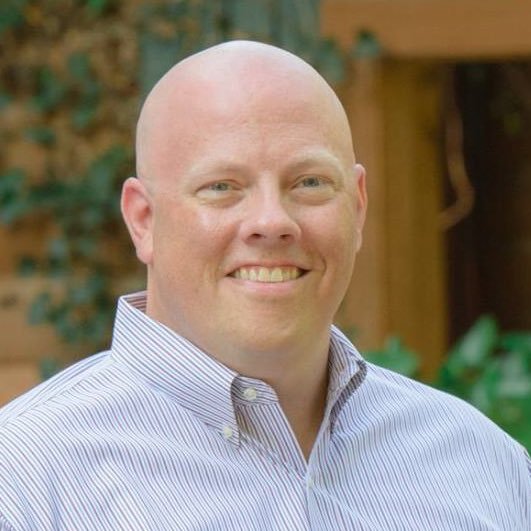
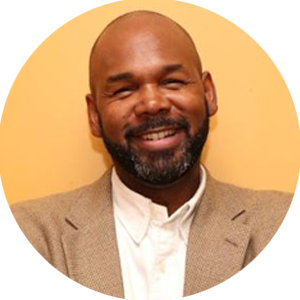
Rev. Dr. Joseph Scrivner
 Rev. Joseph Scrivner, Ph.D., is the Pastor for Bedford Presbyterian Church (U.S.A.) in Bedford, NY. He previously served a dual role in Tuscaloosa, Alabama, as Pastor for Brown Memorial Presbyterian Church and as Dean of Chapel for Stillman College. He has published, lectured, and offered public commentary on religion, ethics, and politics. In addition, Dr. Scrivner was inducted into the Morehouse College Board of Preachers, has secured several grants in higher education, has served at various levels of the denomination, served as a Trustee for the Presbyterian Home for Children in Talladega, Alabama, and is currently a Trustee at Columbia Theological Seminary in greater Atlanta. He earned a Ph.D. in Biblical Studies from Princeton Theological Seminary. He is the proud father of three amazing adult children: Jessica, Joseph II, and Jocquelyn. He is an even prouder grandfather of four incomparable grandchildren: Adrian, Aiden, Lailah, and Jonah. His hobbies include chess, movies, sports, and music.
Tereasa Breckenridge
Posted at 23:03h, 04 SeptemberPastor Joseph, Cuz , I am so grateful for your redirections and commitment to changing to bring a positive greater change for all. I told your mom , I didn’t make my trip to hear and worship with you in Alabama but, if the Lord says the same, I will get to Bedford NY.
Peace, Love and many blessings to you all .
Love,
Tereasa Breckenridge