

Turn out the light
Blow out the candle too
Don’t fear the night coming
I’m right beside you
Turn out the light
Close your tired eyes
Don’t fear the night coming
I’m right here by your side…
… Diamonds in the mine got plenty to shine about
I keep my diamonds down in the mine
– Cass McCombs
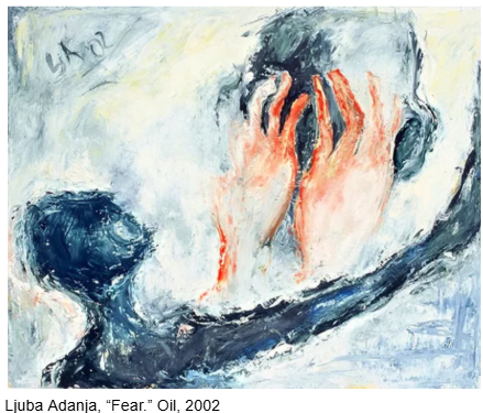
Against the backdrop of the ongoing vulnerability of Black life in America, Howard Thurman in 1949 famously described fear as “one of the persistent hounds of hell that dog the footsteps of the poor, the dispossessed, the disinherited.” He understood fear as a kind of “safety device” for those living under threat but also warned that what protects us can eventually imprison us, until “the power that saves turns executioner.”
Less than a decade later in 1957, reflecting on personal fear and the fear-driven logic of Cold War militarization, Thurman’s mentee, Martin Luther King Jr., insisted, “First we must face our fears without flinching. We must honestly ask ourselves why we are afraid.”
For both Thurman and King, the work cannot stop with naming the dangers around us and what to do about it. It must also reach the deeper places where fear shapes our sense of worth and belonging. King’s exhorting us to ask “why” – this self-examination, both individually and communally – is crucial because the fear most visible in public life is not always the fear that runs deepest in our souls. Beneath anxiety about change, anger at institutional failure, or dread about the future may lie fears of abandonment, betrayal, and powerlessness.
Social psychologists have known for quite some time that what appears on the surface as fear about the economy, institutions, or cultural change may also reveal a deeper crisis of belonging, trust, and agency: uncertainty about whether anyone will be there, whether those responsible for telling the truth can be trusted, and whether we have any meaningful capacity to shape what happens next.

Take for example growing fears about AI. Our collective fear isn’t solely about what AI can do or might do (though such fears are perfectly rational), it’s often about the uncertainty of inhabiting a world moving faster than our minds and abilities can handle. Fears about the economy understandably center on prices, jobs, wages, debt, retirement, the next recession, and essential material needs. But perhaps underneath is the deeper existential fear of precarity, that hard work may no longer be enough, that one unexpected loss could become catastrophic, and that no one will be there to help when the margin disappears. Fear or cynicism about an institution might point to a failed leader, system dysfunction, financial crisis, or an organization that prioritized its own sustainability above the people it was meant to serve. But these fears, somewhat ironically, often stem from a more fundamental dread that there may be no institutions left to rely upon. And then there’s political despair, which we typically describe vis-à-vis policy, legislation, and the need for competent leaders. Yet there is also the underlying, lurking sense that whatever happens next will simply happen to us, that ordinary people have less and less say in shaping the future, that we have no voice.
I’m certain we could all add to the list.
In our preaching, teaching, and disciple-making, do we treat those immediate fears merely as a wall to be torn down and left behind, or as a doorway into the deeper longings of the soul and the freedom God desires for us?
When scripture exhorts or reminds people not to be afraid, it rarely stops there, instead allowing fear to be a doorway into deeper questions: Who am I? Who is with me? Can God be trusted? Does this source of anxiety or dread have the power to determine who I am or what my life means?
When Jesus addresses concerns about the provision of food, drink, clothing, and the future in Matthew 6, he does not mock those anxieties as trivial but tunnels underneath them by asking the disciples what they believe about the Father’s care of them. The presenting fear is scarcity; the deeper fear is that perhaps no one is ultimately attending to us.
And when Jesus says, “Do not fear those who kill the body” (Matthew 10:28), he is speaking to people facing genuine danger. He does not claim the danger is imaginary, but simply relocates it within a broader, eternal horizon. Yes, human threats are real, but they do not possess ultimate authority over a person’s identity, worth, or future before God.
To be clear, it makes perfect sense for congregations to engage in justice for the oppressed and address the daily fears so many face. But don’t stop there, because unless we are simultaneously promoting deep belonging, healing, courage, and collective witness to the gospel, we lose our fundamental identity. It’s that deeper work of remembering, reminding, and practicing what it means to be children of God, because “the awareness of being a child of God,” Thurman wrote, can give rise to “a new courage, fearlessness, and power.”
No Comments