


Tripp Fuller published an insightful essay earlier this year about the pace of modern life, and it includes a helpful illustration that I frequently share with others. Drawing on Hartmut Rosa’s argument that modernity is fundamentally a mode of operation, a way of organizing society that requires constant acceleration simply to remain in place, Fuller offers this image:
“Think of kids in an above-ground pool creating a whirlpool. They start running in circles, and before long the water’s momentum takes over. Once you’re in, the only way to avoid friction is to join the circle. The only way to avoid getting pushed is to keep increasing speed. And if you try to stop? You get pulled under.”
Modern life feels like that whirlpool, everything moving, accelerating, pulling, and spinning at once, with the expectation that we keep increasing our speed even as our souls grow exhausted.
Perhaps one of the most important callings of congregations today is to help people step out of the whirlpool long enough to recover another way of inhabiting time, specifically by ritualizing practices of patience, deceleration, stillness, and the slow work of belonging.
Why “ritual”? Because we are ritualized creatures whose repeated practices shape our attention, desires, relationships, and way of narrating the world. It’s how our sense of identity and human expression finds concrete, embodied, communal form. Our culture initiates us into rituals of impatience: constantly checking, scrolling, reacting, refreshing, interrupting, optimizing, commoditizing, and moving rapidly from one thing to the next, all of which train us to experience slowness as failure, silence as emptiness, stillness as counterproduction, and waiting as waste.
The church is uniquely positioned to meet this moment because we have inherited a long tradition of instruction and practices meant to focus attention, temper reactiveness and impulsiveness, and nurture soul-level patience. In the famous parable of the sower, Jesus explains that the good soil represents those who, hearing the word, not only bear fruit, but “bear fruit with patience” (Luke 8:15).The apostle Paul picks up on this principle, calling Jesus followers to be clothed “with compassion, kindness, humility, gentleness and patience” (Colossians 3:12) and to bear with one another in love “with all humility and gentleness, with patience” (Ephesians 4:2). James similarly exhorts us to be “quick to listen, slow to speak, slow to anger” (James 1:19). We are told to “be still before the Lord, and wait patiently for him” (Psalm 37:7).The church fathers and later spiritual teachers followed suit. Two brief examples suffice. St Hesychios the Priest (5th century) describes watchfulness as “a spiritual method which, if sedulously practiced over a long period, completely frees us… from impassioned thoughts, impassioned words and evil actions… It is the heart’s stillness”. St Francis de Sales (1567–1622) offers similar counsel: “Never be in a hurry; do everything quietly and in a calm spirit. Do not lose your inner peace for anything whatsoever, even if your whole world seems upset”.
Ritualizing practices of patience, deceleration, stillness, and the slow work of belonging requires congregations to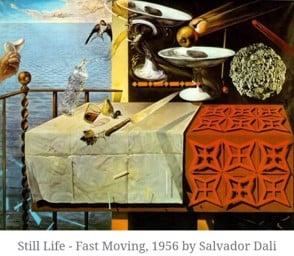 create spaces and instill practices that are not merely different from the rest of the culture but are also at a different pace, duration, and frequency. Depending on one’s context, this might take the form of consistently practicing extended silences, slower reading of scripture, more shared meals (and preparing meals together), unrushed contemplative prayer or lectio divina, sustained communal discernment, an intermittent discipline of solitude and stillness, or public testimonies within the community of faith that leave room for ambiguity rather than forcing every story into a clean resolution. Such practices can feel awkward or unproductive. So be it. The formative power is in their repetition over a long period of time (or what Eugene Peterson called “a long obedience in the same direction.”)
Christian community grows slowly because human beings and relationships grow slowly. Becoming part of a community involves learning complex stories, enduring misunderstandings, repairing conflicts, preparing meals, caring for children, sitting beside the sick, and fully embracing those who struggle to experience relationship or belonging anywhere else.
For many of us, this calls for a different way of assessing ministry. Instead of, “Did we get through the worship service smoothly?” perhaps ask, “Did the liturgy help us become more patient, attentive, gentle, and rooted in God’s time?” Instead of, “Did that program run efficiently?” ask, “Did this slow us down enough to notice the margins, attend to those who suffer, and sit with ambiguity?” Instead of, “Did people show up?” ask, “Did this clothe us, even a little, in patience and compassion?”
What other questions might we ask?
Congregations are not called to change or fix the speed of the broader culture but to cultivate avenues where time is inhabited differently, where silence is not emptiness, and slowness is not failure. We need to help each other step out of the whirlpool, recover the pace of creaturely life, and learn again the long work of becoming more human in God’s time, together.
Questions for Discussion:
- Where do you most feel the “whirlpool” of acceleration in your own life, and how is it shaping your capacity for attention, prayer, or relationships? What would it feel like to step out of it, even briefly? How might you take that step?
- Which practices named in the reflection (silence, slow scripture reading, shared meals, contemplative prayer, patient listening, etc.) feel most life-giving or most resistant for you, and why? What are some other practices or disciplines that should be added to the list?
- What questions should our congregation be asking about our gatherings, rhythms, and relationships if our aim is to grow in patience, gentleness, and the slow work of belonging?


No Comments