

Our TMC team continues to explore what this moment requires of ministry leaders. Not louder voices, not faster movement, not better branding, but something deeper.
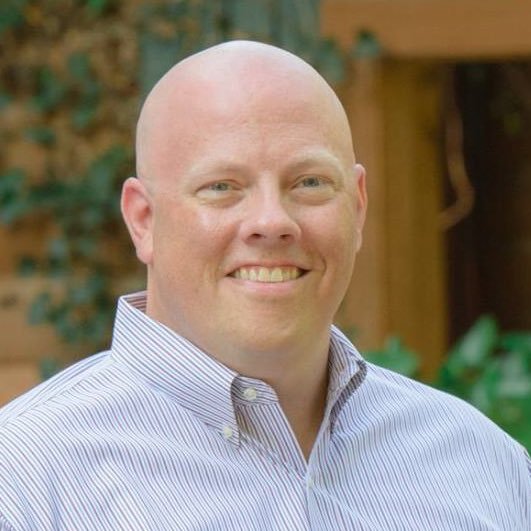
We are not short on passion. If anything, passion is everywhere, urgent, reactive, constant. But as Adam Mixon reminds us, “the world doesn’t lack passion. It lacks footing.” Ministry in this moment can feel like endless motion, emails, crises, initiatives, but motion is not the same as direction, and direction requires us to ask a more fundamental question: where are we standing? Because movement without a foundation is just motion, and when everything feels equally urgent, we discover the truth that when everything matters, nothing does. The invitation before us is not to do more, but to stand somewhere real, to be grounded again in Christ, in community, and in practices that hold us steady when everything else accelerates.
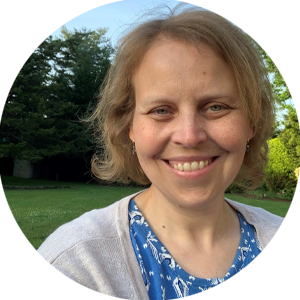
And yet, the moment we begin to stand still long enough to notice where we are, we encounter friction. Resistance, difficulty, the parts of ministry that refuse to resolve cleanly. As Mark Ramsey writes, “life can rarely be reduced to a poster.” Friction is not evidence that something has gone wrong; it may be the very place where something is going right, “an opportunity to trust God in hardship. All of it.” This kind of formation is not comfortable. It requires us to address the present moment with honesty rather than escaping into slogans or distractions. But in doing so, something shifts: the shallow things begin to fall away. Shallow distractions evaporate. Friction, in this sense, becomes formative, it clarifies, deepens, and reshapes us into leaders who are less reactive and more rooted.
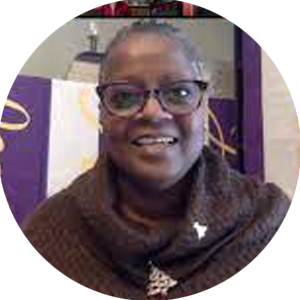
From that place, a different kind of leadership begins to emerge. We are leading in a time where misunderstanding is common, and the misrepresentation of Christianity is at an all-time high. It would be easy either to withdraw or to fight back with equal force, but instead we are invited into what might be called unstickable leadership, leadership that is spiritually grounded, strategic, and subversive. Jennifer Watley Maxell reminds us that this posture allows us to engage respectfully and intentionally without becoming entangled in every conflict. Like Muhammad Ali’s rope-a-dope, it absorbs pressure without being defined by it; it is able to withstand the mud without letting it cling. Or simply put: the mud does not stick. This is not passive leadership, but deeply intentional presence, knowing who we are and why we are here so that we can engage the world without being reshaped by its chaos.
Underlying all of this is a broader cultural shift. We are moving into what Adam Borneman calls the “age of the actual,” a world shaped by AI, digital performance, and constant mediation, where a new question quietly emerges: is this real? Or even more bluntly, is this AI? Reality itself now feels unstable, something that must prove itself. Surrounded by constructed identities and curated experiences, people are increasingly hungry for what is unmistakably real. This changes the work of ministry. People are not primarily looking for better ideas or more compelling arguments; they are looking for encounter, presence, embodiment. After all, the risen Christ did not offer an idea, he offered himself.
Pulling these together, we might say that ministry is not about mastering complexity, but about inhabiting a different kind of life, one that is grounded, formed, unstickable, and real.
Perhaps the question before us is not:
- How do we move faster?
- How do we do more?
- How do we fix everything?
Perhaps the deeper questions are:
- Where is God inviting us to stand?
- What tensions might be forming us?
- What truth are we called to tell?
- What reality are we called to love?
This is slower work than we might prefer, less visible and harder to measure, but it is the work that lasts. The Church does not need more motion. It needs people who know where they stand.
No Comments