

A couple of weeks ago, a young adult in my church returned from vacation to find her career-related institution being dismantled. She was disheartened, saying, “I never wanted to be a freedom fighter.” While she advocated for students with disabilities and those from disadvantaged backgrounds, she never imagined engaging in civil disobedience. I wanted to comfort her, but all I could do was share her lament. It broke my heart to sit with one so young, talented, and bright as her future grew dim.
A week later, a middle-aged man approached the altar for prayer. He had been laid off but hadn’t told his family. Despite positive reviews and a lengthy employment history, budget cuts eliminated his department. At once looking forward to retiring, the thought of job hunting in a saturated market with people half his age terrified him. As we prayed, his tears turned into a deep, heavy moan.
Later that week, I spoke with colleagues about the wave of grief overtaking so many people’s lives. Beyond life’s normal vicissitudes, for many the sense that our fundamental democratic values and institutions are failing adds layers of despair, pushing many to the frontlines. One person said, “My body feels like it did in Covid—heavy and tired.” Another commented, “I need to do something more, something different,” despite being paralyzed by fear.
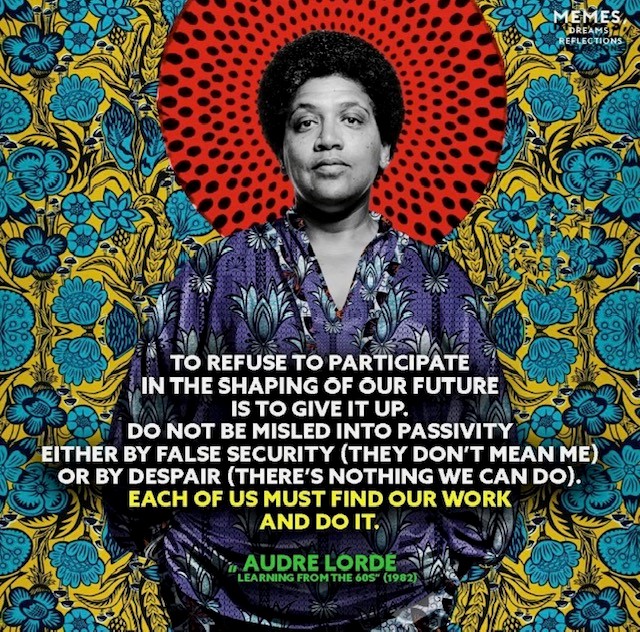
In February 1982, Audre Lorde remarked at the Malcom X celebration weekend at Harvard University: “To refuse to participate in the shaping of our future is to give it up. Do not be misled into passivity either by false security (they don’t mean me) or by despair (there’s nothing we can do).” Each of us must find our work and do it.”
Last week, economist Robert Reich wrote: “The disappearance of America’s leadership class means the rest of us have to be leaders. We can no longer wait for them. You must lead, I must lead, all of us must lead. We are the leaders we’ve been waiting for.”
Audre Lorde and Robert Reich remind us of Mordecai’s words to Esther: “Do not think that because you are in the king’s house you alone of all the Jews will escape. For if you remain silent at this time, relief and deliverance for the Jews will arise from another place, but you and your father’s family will perish. And who knows but that you have come to your royal position for such a time as this?” (Esther 4:12-14 NIV)
These quotes are not new, but they are desperately needed reminders. Whether helping our communities bear grief, galvanizing resources, reengaging with allies or former enemies, or challenging unjust systems, we must each ask ourselves:
- What is God doing in the world that deserves my attention?
- What is my work to do? How will I be a co-worker in God’s service? (1 Cor 3)
- What kind of leader am I called to be in this season?
- Who can I invite to join me in this work?’
And then, we must do it!
In addition to the questions embedded in the post:
- How do we as individuals and as a community acknowledge both personal grief and collective responsibility?
- What fears or barriers make it hard to step into the work God is calling you (or us!) to do, and how might faith and community help overcome them?


No Comments